What it is
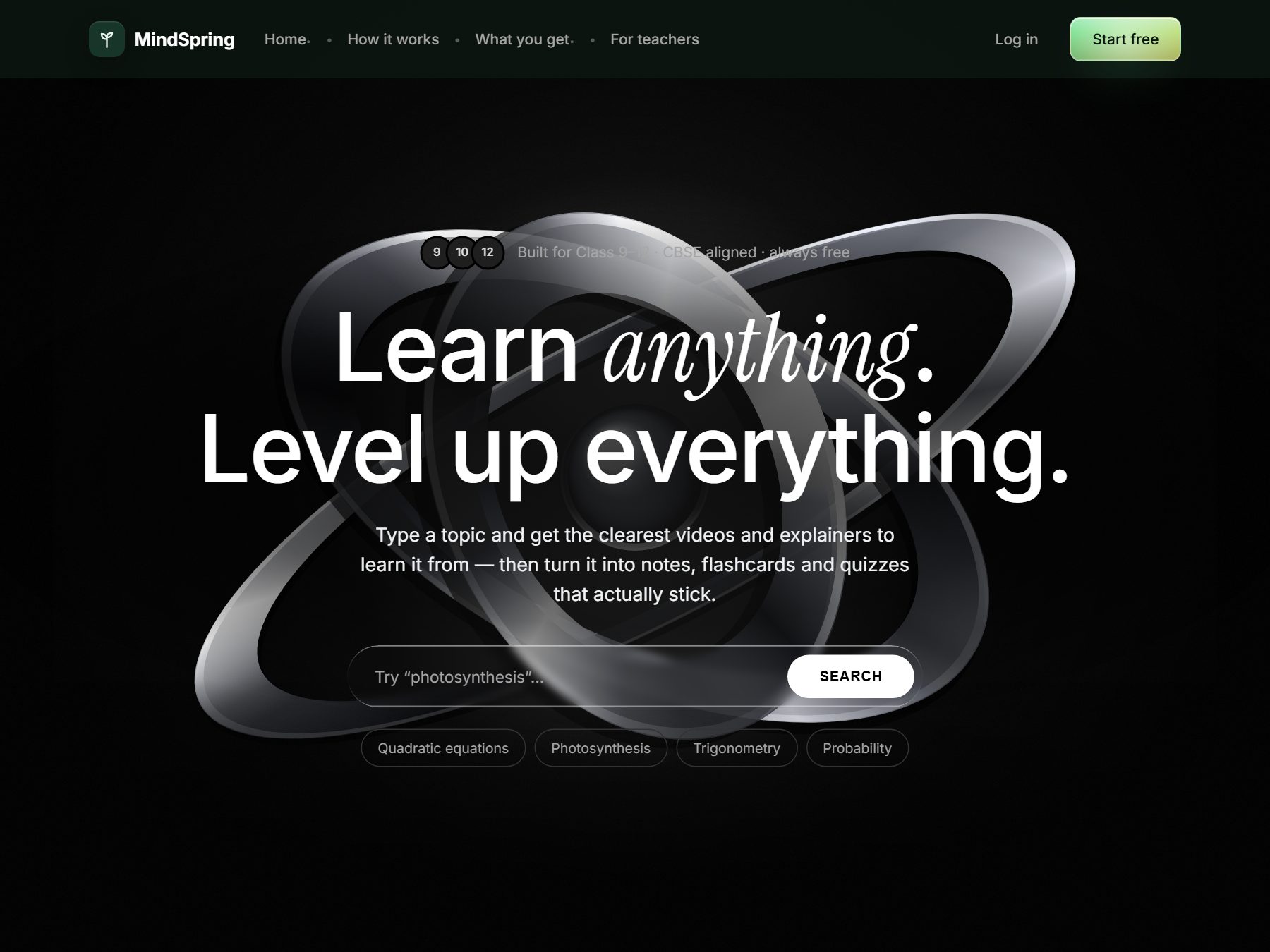
Mindspring is a study platform for students in grades 9–12 following the CBSE curriculum. It collapses the whole study loop into a single app: searching for something, turning it into notes, turning those notes into flashcards, then drilling until it sticks.
There are 18 tools in it. Search scoped to the syllabus so results are actually relevant. Notes and flashcards generated from what you're studying. An AI tutor called Sage. Practice in several shapes — quizzes, Speed Blast, Memory Match, True/False. And full practice papers with readiness checks for when an exam is close.
It's free. No card, no trial limit, no tools held back behind a premium tier.
Why I built it
Studying without a tutor is hard. That's the whole reason this exists — I wanted the thing I didn't have.
The obvious shortcut is to just ask a free AI model, and I tried that for a while. It kept failing in the same two ways: it hallucinates, confidently, and it hands you things you never asked for — three paragraphs when you wanted one line, or an answer to a question you didn't ask. When you're revising, that is worse than no help at all, because you can't tell which parts to trust.
So Mindspring is deliberately narrow. Everything is scoped to your grade and the CBSE syllabus instead of the whole internet, which leaves far less room to wander off. That one constraint is what made it genuinely easier to study with, and it's why I kept building it.
How it works
The whole thing is vanilla JavaScript. No framework, no build step — what I write is what the browser runs.
- Firebase is the back end: Firestore for data, Auth for accounts, Hosting for delivery. That's what lets your notes, decks and streak follow you onto any device without me running a server.
- Gemini 2.5 Flash powers Sage and the generation — notes, flashcards, questions. Flash is the part that makes free possible: it's quick and cheap enough that eighteen tools don't add up to a bill I can't pay.
- It's a PWA, so it installs to a phone home screen and behaves like an app instead of a tab.
No framework is an unusual choice for something with eighteen tools in it — most people would reach for React long before this size.
What I learned
Two things, one technical and one not.
The technical half was Firebase and working with APIs properly — auth, a real database, and wiring a model into a product rather than just typing at it in a chat window.
The harder half was figuring out what actually appeals to students. A study tool can be completely correct and still go unused. Nobody wants more work; they want less of it, and anything that feels like homework gets closed. That shaped more of what Mindspring became than any technical decision did.